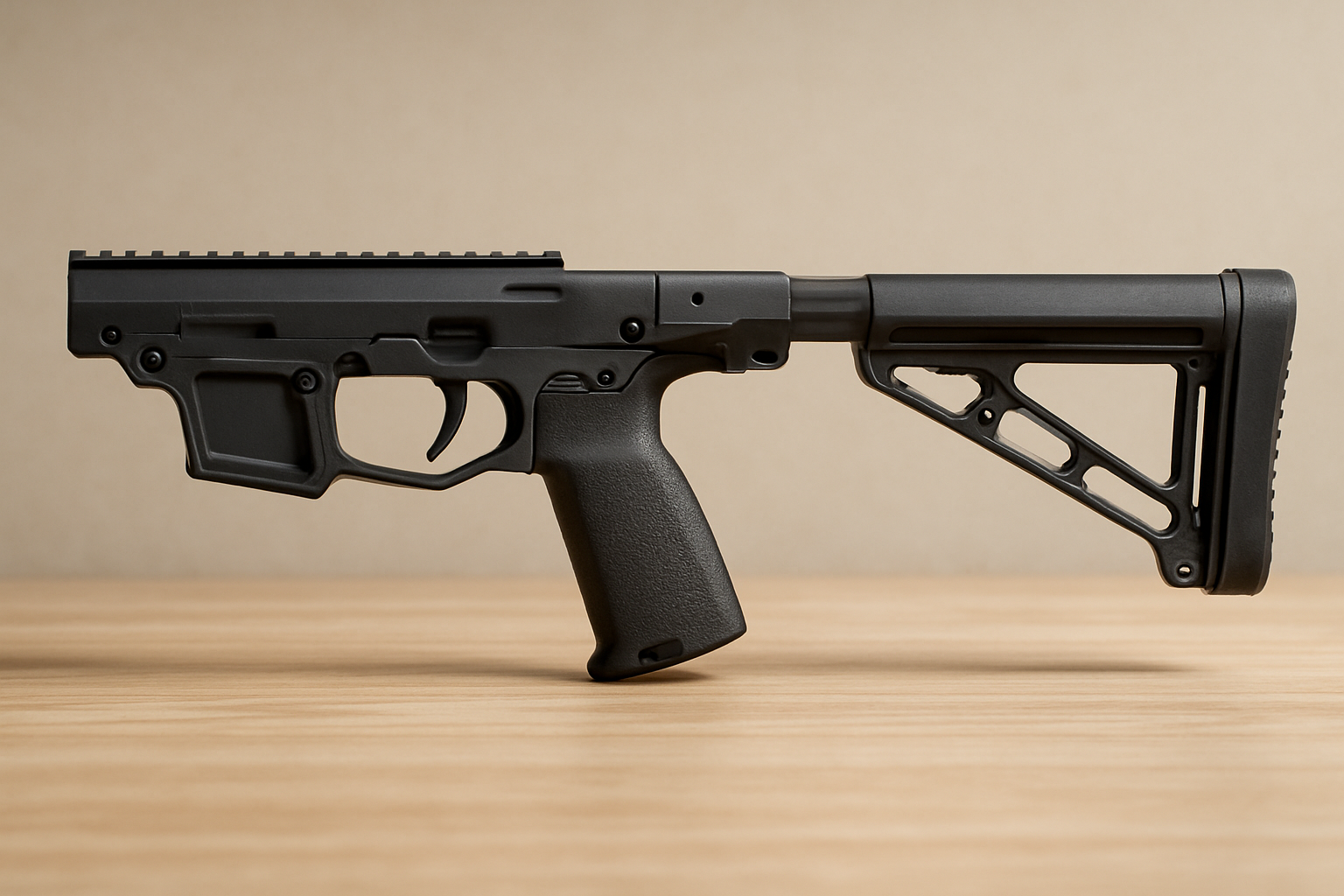
Skill without safety is a liability. For shooters adopting a chassis configuration, technical proficiency must be built alongside a thorough understanding of the safety protocols specific to this type of setup. Many users approach chassis-equipped pistols with the assumption that prior handgun experience fully prepares them for the transition. That assumption carries risk. Training safely with a pistol chassis system requires deliberate preparation, appropriate instruction, and a clear plan for building competency progressively.
What Makes Training With a Chassis System Different From Standard Pistol Training?
A chassis-equipped pistol handles differently from a standard handgun in almost every respect. The weight distribution shifts significantly, the grip geometry changes, and the method of shouldering the firearm introduces techniques more commonly associated with long guns than handguns. Shooters familiar with standard pistol platforms will notice that their existing muscle memory does not transfer directly.
This disconnect is not inherently dangerous, but it becomes a risk when users attempt to train at full speed or under pressure before they have built appropriate foundational skills with the chassis setup. Rushing the skill-building process increases the likelihood of unsafe gun handling, including poor muzzle discipline and inconsistent trigger control.
How Should New Chassis Users Structure Their Initial Training?
The most effective approach begins with dry-fire training in a controlled environment before any live ammunition is introduced. Dry-fire practice allows the shooter to develop familiarity with the new grip, stock placement, sight picture, and trigger reach without the added variables of recoil and range protocol.
During initial dry-fire sessions, focus specifically on the four fundamental rules of firearm safety as they apply to the chassis configuration. Practice maintaining proper muzzle direction, keeping the trigger finger indexed outside the trigger guard until the sights are on target, and verifying that the firearm is unloaded before every session. These habits must be ingrained before moving to live-fire exercises.
When transitioning to live fire, begin with slow, deliberate drills at close distance. Speed and complexity should only be introduced after the shooter demonstrates consistent safe handling across multiple sessions.
What Role Does Professional Instruction Play in Safe Chassis Training?
Self-directed training has value, but it also has limits. Professional instruction from a certified firearms trainer who has experience with chassis systems provides feedback that cannot be obtained through solo practice. A qualified instructor can identify unsafe handling patterns early, before they become deeply ingrained habits.
When selecting an instructor, look for credentials from recognized training organizations and verify that the instructor has direct experience with chassis-mounted pistol platforms. Not all handgun instructors have exposure to chassis systems, and training with someone unfamiliar with the configuration’s specific demands can result in guidance that does not account for its unique safety considerations.
How Should Range Protocols Be Adjusted for Chassis Use?
Standard range rules apply to all firearms without exception, but a chassis-equipped pistol may require additional attention to certain protocols. The extended length and altered profile of a chassis system can make holstering and unholstering more complex, particularly at ranges where movement drills are part of the curriculum.
Before participating in any dynamic training exercise, confirm with the range safety officer that your chassis configuration is permitted and discuss any movement protocols that apply. Never assume that a configuration acceptable at one facility is automatically welcome at another.
Additionally, be conscious of others on the range. A chassis system that extends the overall length of the firearm requires greater awareness of muzzle direction when transitioning between positions or moving between shooting stations.
Progress Deliberately, Stay Safe Consistently
Safe training with a chassis system is ultimately about building a disciplined foundation and expanding capability from that foundation in a measured, intentional way. Competence grows through repetition, honest self-assessment, and a willingness to slow down when safety fundamentals are not yet automatic. Prioritize safety at every stage of development, and skill will follow naturally.